A Few, Brief Responses To,
and From, a Lecture
by
Walter Brueggemann
By Jonathan Mitchell
This lecture was given in 2014 at Luther Seminary, and is now available on YouTube. The title of his presentation was, "Why the OT Must Not Go Away."
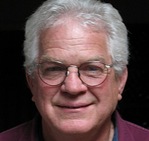 I would call his lecture an overview, or sketch, of the OT, in which he focuses on what he considers to be the salient points for his listeners to take away. He describes his methodology of interpretation as being a "liberation hermeneutic, in which God is an identifiable Agent, with a Name, who acts in Freedom for the sake of emancipation of humanity" (a paraphrase, from my notes). This calls to mind Douglas A. Campbell's phrase for justice/righteousness, "eschatological deliverance" - the concept which is central to Paul's presentation of God's salvation and deliverance which come to us in Jesus Christ.
Brueggemann views God as having a "resolve for graciousness" - which can be seen in God's compassion for the plights of the oppressed. We can observe this in the story of Moses and the Exodus. But, as we see in the Law (Torah) given at Sinai, God presents a "summon to engagement" - He expects participation in a covenantal relationship, in which He created Israel as a set-apart people group.
Brueggemann sees God as "an Active Force of Holiness" which involves human partnership. He refers to God as an "Agent of Dialogic Holiness" - God dialogues with mankind, instructing folks how to be set apart from other people groups which are not seen as demonstrating the characteristics of "neighborliness." Brueggemann considers the book of Deuteronomy as "the baseline of the struggle for neighborliness." Those other nations worship idols, and he cites Ps. 115:4-8 as showing that "idols do nothing." Thus, they support the status quo. They are not like Yahweh, who is an Active Force, and Who "opens the power for Life."
Faithfulness to Yahweh is expressed in "relational terms," such as love, fidelity, obedience, justice, righteousness, etc.
The YouTube synopsis of his lecture presents it as being about, "The God Who inhabits the text, and Who engages in dialogic freedom and Who subverts unbearable presents, while keeping the future open." (a paraphrase). This suggests that if God inhabits the text, then we can engage Him there. Recall how Jesus spoke to the disciples on the road to Emmaus,
"O senseless (or: unintelligent; mindless) ones and folks slow at heart to be trusting and believing on all things which the prophets spoke.... And so, beginning from Moses, and then from all the prophets, He continued to fully interpret and explain to (or: for) them the things pertaining to (or: the references about) Himself within all the Scriptures." (Lu. 24:25, 27)
In Isa. 11:10 we have the prophecy,
"And then there will be (will continuously exist), in that Day, The Root of (or: from) Jesse, even The One constantly standing back up, to continuously rule ethnic multitudes (or: people groups; [the] nations). Upon Him ethnic multitudes will continuously and progressively set expectations, and The Rest from Him will continue being value, honor and respect" (LXX, JM).
Isa. 53:2 tell us that this Root would sprout out "from arid earth (or: dry ground)." Later, Paul would use the metaphor of "the Root" as being the origin, source and stability of the olive tree into which believing ones from the ethnic multitudes would be grafted. This olive tree typified OT, first covenant, Israel, the Root which bears and supports the branches of this "anointing tree" (Rom. 11:17-18; [cf Zech. 4:3, 11-14]). Yes, the OT must not go away. It is the first part of the human saga, the basis upon which the NT is built - which is a continuation of the Story. Much of the NT is either quotes of, or allusions to, the OT. It is the context for the New Creation.
Jonathan

Return To Jonathan Mitchell's Page